
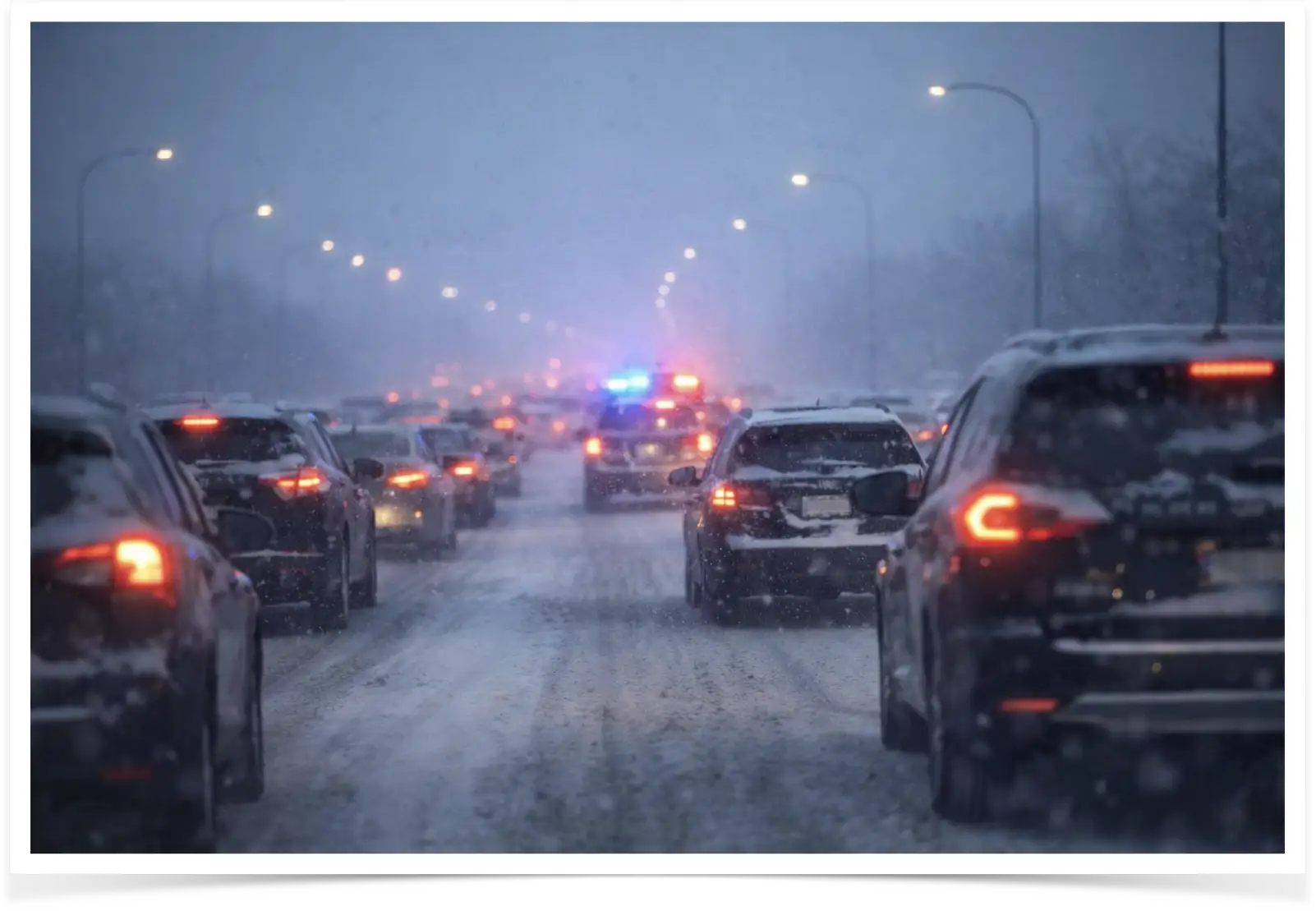
Winter driving is part of life in Michigan. Snow-covered roads, black ice, reduced visibility — most drivers expect these challenges and adjust accordingly. What many people don’t expect is how easily a winter car accident can be brushed off as “minor,” even when the body has absorbed forces it wasn’t designed to handle.
Dr. Pavel Bence sees this pattern every winter at his Macomb-area practice. Patients often come in days or even weeks after a crash, unsure whether what they’re feeling is related at all.
“A lot of people tell me the same thing,” Dr. Bence says. “They say, ‘It didn’t seem like a big accident.’ And from a vehicle standpoint, that might be true. But the body doesn’t measure impact the same way a car does.”
How Common Are Winter Crashes in Michigan — and Why Do We Underestimate Them?
Winter crashes are far more common than many drivers realize. According to the Michigan Office of Highway Safety Planning, Michigan records tens of thousands of crashes each winter season involving snow, ice, or winter weather conditions. In recent seasons, those crashes have resulted in thousands of injuries and dozens of fatalities statewide.
On a national level, the Federal Highway Administration reports that nearly 24% of all weather-related crashes occur on snowy, slushy, or icy pavement. Each year, those conditions contribute to over 1,300 deaths and more than 100,000 injuries across the United States.
Dr. Bence points out that statistics like these don’t always align with how people feel after a winter crash. Many involve low-speed collisions — a slide into another vehicle or a rear-end impact at an intersection — which makes them easier to dismiss.
“People assume that if the car isn’t badly damaged, they must be fine,” Dr. Bence explains. “But I’ve seen plenty of cases where symptoms didn’t show up until days or even weeks later.”
Dr. Bence often emphasizes that it’s not the severity of the crash that determines long-term impact — it’s what happens afterward.
“Lower-impact collisions are actually the ones that tend to cause the most problems,” he says. “Not because they’re more violent, but because people neglect them. When pain doesn’t show up right away, injuries often go unaddressed.”
Why Winter Accidents Don’t Always Hurt Right Away
One of the most misleading aspects of winter car accidents is the delay in symptoms. Someone may walk away shaken but otherwise fine, only to notice stiffness, headaches, or discomfort days — or even weeks — later.
What surprises many people is how much force the body can experience in a low-speed crash. Research has shown that impacts in the range of 8 to 20 miles per hour can generate significant forces on the head and neck — far more than most people would expect from a “minor” collision.
Dr. Bence explains that these forces don’t always cause immediate pain, but they can stress the spine and surrounding structures in ways that aren’t immediately obvious.
Low-impact collisions are especially easy to dismiss. Yet research and clinical experience consistently show that it’s often these “fender-benders” that go untreated — not because they’re harmless, but because they don’t cause immediate pain.
Dr. Bence sees this pattern frequently, particularly in winter, when cold temperatures and adrenaline can mask inflammation and stiffness. Muscles tighten in response to stress and cold, and discomfort may only become noticeable once the body begins to relax.
This delayed response is especially common with soft-tissue injuries — damage to muscles, ligaments, and connective tissues that doesn’t always show up on imaging but can still interfere with normal movement and comfort.
That experience is something many patients recognize in hindsight.
“After my ‘fender-bender,’ I suffered from minor aches that developed into constant pain. I then saw Dr. Bence, who even stopped the severe headaches that medications could not touch.”
— Cathleen, patient
This kind of progression — from mild discomfort to persistent symptoms — is one of the main reasons winter crashes deserve a second look, even when they didn’t feel serious at the time.
Why Do Winter Crashes Affect the Body Differently?
Winter accidents often involve sudden, unpredictable movements. Sliding through an intersection, spinning after losing traction, or stopping abruptly on ice can all place unusual stress on the body — even when speeds are relatively low.
Seatbelts restrain the torso, but the head continues to move. That mismatch can strain the neck and upper back, irritate joints, and disrupt normal spinal motion. Dr. Bence often explains to patients that it’s less about how fast the vehicles were going and more about how suddenly the body was forced to move.
From a chiropractic perspective, the concern isn’t just pain. It’s how the spine is moving — or not moving — after the accident. Restrictions in motion can linger long after the initial soreness fades.
What Symptoms Do People Often Dismiss After a Winter Crash?
Many patients describe symptoms that don’t initially raise alarm but gradually interfere with daily life. Dr. Bence hears these stories frequently, often prefaced with, “I didn’t think it was related.”
Commonly dismissed symptoms include neck stiffness when turning the head, headaches that weren’t present before the crash, upper back or shoulder tightness, and low back discomfort that worsens with activity. Some people also report feeling unusually fatigued or mentally foggy.
“I’ll hear things like, ‘I thought it was just stress,’ or ‘I figured it was the cold,'” Dr. Bence says. “But once we talk through the timing, it becomes clear the accident played a role.”
What You Can Do After a Winter Car Accident
If you’ve been involved in a winter crash — even one that seemed minor — paying attention to your body in the days that follow matters. Subtle changes in how you move or feel can provide important clues.
Dr. Bence advises patients to take note of new or changing symptoms, avoid pushing through pain unnecessarily, and use ice or gentle movement if stiffness develops. Documenting when symptoms appear — and how they change — can also be helpful.
As he often tells patients, you don’t need to panic after a winter accident — but you also shouldn’t ignore what your body is telling you.
When Does a Chiropractic Evaluation Make Sense After a Winter Crash?
Not every winter accident results in a serious injury. However, an evaluation may be appropriate if symptoms linger, worsen, or appear days after the crash.
“Our goal isn’t to over-treat,” Dr. Bence explains. “It’s to understand what’s going on and help people recover properly — before small problems turn into long-term issues.”
A chiropractic evaluation focuses on spinal movement, joint function, and soft tissue health — areas commonly affected in winter crashes but often overlooked when symptoms are delayed.
Children are another group that’s often overlooked after winter car accidents. Because they may not communicate discomfort clearly — and because modern safety devices don’t always fit smaller bodies perfectly — symptoms can be missed.
Dr. Bence encourages families to take any car accident seriously, regardless of a child’s age or whether complaints are immediate. Early evaluation can help ensure small issues don’t become larger problems later.
Listening to Your Body This Winter
Winter car accidents in Michigan are common, and many are easy to dismiss. But when something feels different after a crash — even a minor one — it’s worth paying attention.
“Your body keeps score,” Dr. Bence says. “The sooner we understand what it’s been through, the better the outcome usually is.”
If you’ve been involved in a winter car accident — even one that didn’t seem serious at the time — and you’ve noticed changes in how your body feels or moves, an evaluation can help clarify what’s going on. Dr. Pavel Bence at Bence Chiropractic helps patients understand the effects of winter crashes and supports a proper recovery. To schedule an appointment, call (586) 978-9900 or visit www.bencechiro.com.