
Bence Chiropractic | Balance and Neurological Health
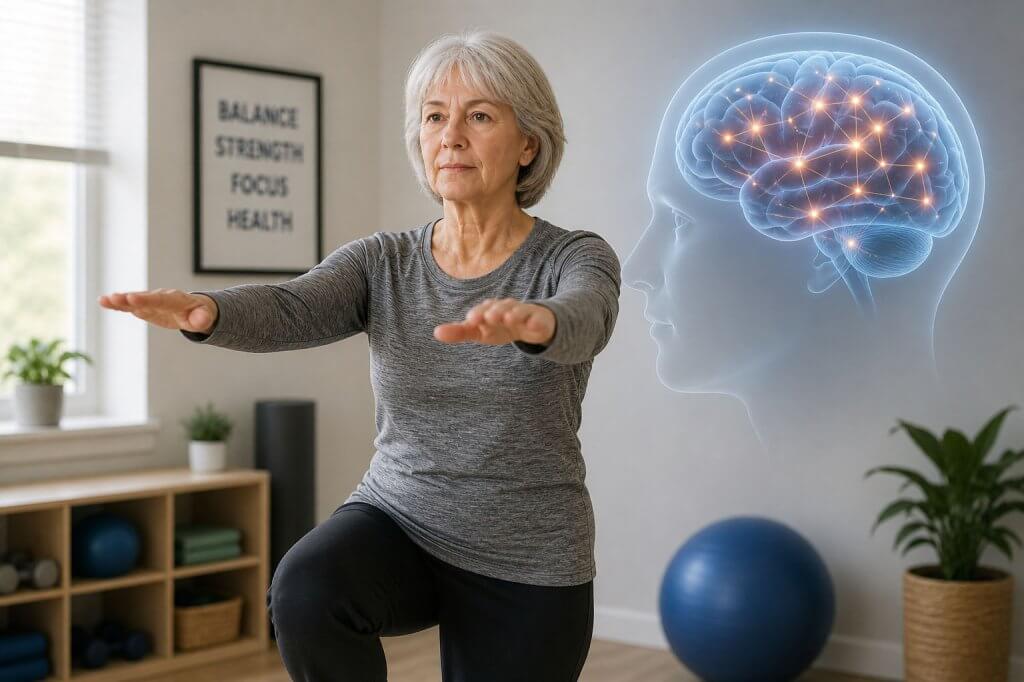
Most people think of balance as a physical skill. But the research tells a more complex and surprising story — one where balance and brain health are deeply intertwined, in both directions.
A 2025 report from the American Heart Association highlighted that as people age, balance becomes increasingly important not just for physical activity but for supporting cardiovascular and brain health. The connection is not incidental: poor cardiovascular health can impair the systems that maintain balance, and reduced physical activity from balance loss in turn accelerates cognitive and cardiovascular decline. Balance sits at the center of this cycle.
How the Brain Manages Balance
The Cleveland Clinic explains that maintaining balance requires the brain to constantly process signals from the inner ear, eyes, muscles, and joints simultaneously. When something disrupts that processing — whether from aging, injury, neurological change, or cardiovascular factors — balance suffers. The brain, in other words, is not just a passive receiver of balance information. It is an active manager, and when it is under strain, balance is one of the first things to show it.
Balance training is, in a real sense, cognitive training.
What the Research Shows
A landmark study published in JAMA Otolaryngology found that balance function is significantly associated with all-cause and cause-specific mortality among U.S. adults. The researchers found this association held across multiple causes of death — not just falls and injuries — suggesting that balance reflects the integrated function of multiple body systems, including neurological and cardiovascular health.
Research published in Psychology and Aging adds another layer: individuals with poorer balance performed significantly worse on tests of memory and spatial cognition. The relationship is bidirectional. Cognitive decline can impair balance, and balance challenges increase cognitive load — particularly when divided attention is required, which is the norm in everyday life.
The encouraging finding is that this works in reverse too. Structured balance training has been shown to improve reaction time, spatial awareness, and aspects of memory in older adults — because it actively engages the brain while training the body. Balance training is not just physical rehabilitation. It is neurological training.
How Bence Chiropractic Addresses Both
At Bence Chiropractic, Dr. Pavel Bence uses the ProBalance360 — a system that includes dedicated cognitive evaluation and cognitive therapy protocols alongside physical balance testing. Because the brain and body cannot be separated in balance care, treatment at Bence Chiropractic addresses both. For more on the full scope of what modern balance assessment covers, see: How Balance Is Measured Today. For the comprehensive overview of balance and health, read: Why Balance Matters More Than Most People Realize.
Related Reading
→ Why Balance Impacts Independence and Quality of Life
→ Why Balance Issues Are Not Just a Senior Problem
→ How Balance Is Measured Today
→ Why Balance Matters More Than Most People Realize
Bence Chiropractic Wellness Center | (586) 978-9900 | www.bencechiro.com | 21 Mile and Garfield Roads, Macomb, MI