
Bence Chiropractic | Balance for All Ages
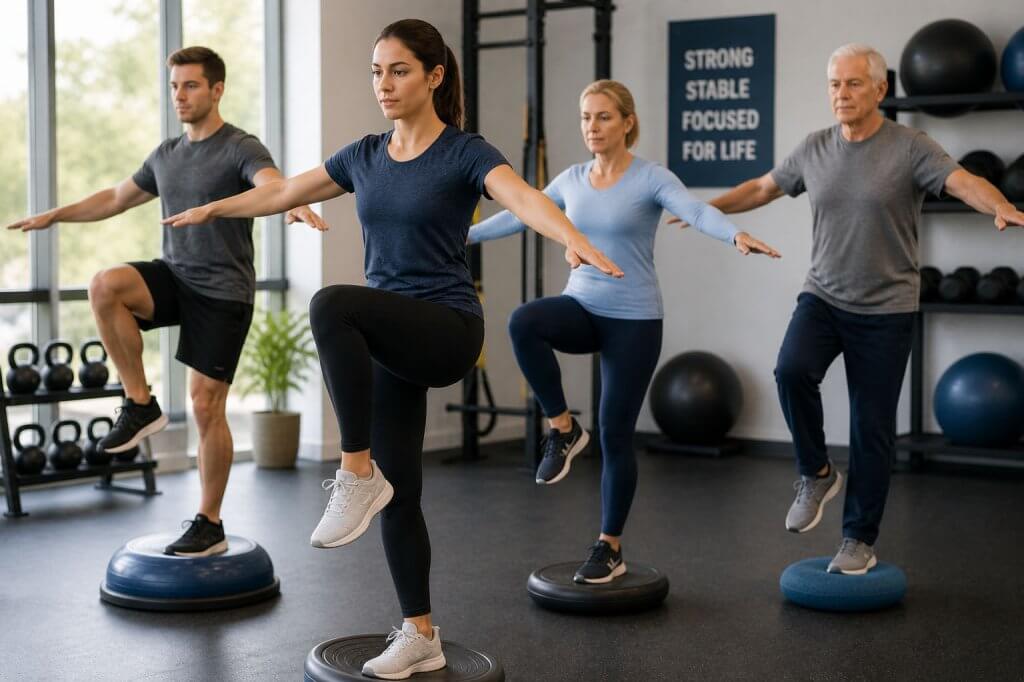
Balance gets talked about mostly in the context of older adults and fall prevention — and for good reason, given how serious that issue is. But if that is all the conversation covers, tens of millions of people who genuinely need help never get it.
A large national study published in Archives of Internal Medicine found that 35.4% of adults aged 40 and older — roughly 69 million Americans — show evidence of vestibular dysfunction, a condition affecting the inner ear’s role in balance and spatial orientation. That is more than a third of middle-aged adults, most of whom would never describe themselves as having a balance problem.
What Balance Problems Actually Look and Feel Like
Part of why this goes unrecognized is that the symptoms are easy to dismiss or misattribute. The Cleveland Clinic notes that balance problems can feel different depending on which system is affected — some people experience dizziness or vertigo, while others simply feel unsteady when standing quickly, walking on uneven ground, or moving through a dark room. These are easy to write off as tiredness, stress, or simply getting older.
The Mayo Clinic points out that balance problems often signal an underlying health issue — and that identifying the root cause is what makes treatment effective. Masking symptoms without understanding why balance is breaking down leads to temporary relief at best.
The Athlete Connection
For athletes, poor postural stability is one of the strongest predictors of ankle sprains, knee injuries, and lower-extremity strain. Multiple controlled studies have shown that balance training significantly reduces those injury rates — making stability assessment a smart part of any serious athletic conditioning program, not just a concern for older patients.
Balance issues do not announce themselves. But they can be measured, addressed, and corrected.
The Everyday Adult
For working adults, the picture is subtler. Years of desk work, sedentary habits, prior injuries, and stress on the nervous system quietly erode balance without obvious warning signs. The American Heart Association notes that federal physical activity guidelines now specifically include balance training as a recommended component of weekly exercise for older adults — a recognition that balance is a preventive health priority, not just a rehabilitation concern. That logic applies across age groups.
For more on how balance affects the brain and cognitive function at any age, see: How Balance Connects to Brain Health. For what modern clinical assessment looks like, see: How Balance Is Measured Today.
At Bence Chiropractic
Dr. Pavel Bence at Bence Chiropractic uses the ProBalance360 for patients across the age spectrum — from older adults pursuing fall risk screening to athletes protecting their performance to working adults who want to get ahead of a problem before it becomes a bigger one. For the complete picture, read: Why Balance Matters More Than Most People Realize.
Related Reading
→ Why Balance Impacts Independence and Quality of Life
→ What the CDC Says About Falls and Aging
→ How Balance Connects to Brain Health
→ How Balance Is Measured Today
→ Why Balance Matters More Than Most People Realize
Bence Chiropractic Wellness Center | (586) 978-9900 | www.bencechiro.com | 21 Mile and Garfield Roads, Macomb, MI